
Define the finished application
A large wall panel, a small keychain blank and a business sign do not need the same stiffness, surface appearance, edge treatment or packaging. Define whether the part will be hung, mounted, punched, handled frequently, used indoors or exposed to outdoor conditions.
The application also determines whether a white photographic base, a clear metallic effect or a low-glare matte surface is more appropriate.
Compare the surface before comparing price
Inspect gloss level, color of the unprinted base, brushed direction, particles, scratches and protective film. Then print a file containing neutral grays, skin tones, saturated colors, fine text and smooth gradients.
A cheap sheet that requires extra rejects, cleaning or color correction can cost more in production than a more consistent option.
- Check several locations across a full sheet.
- Compare sheets from more than one carton.
- Keep the same press and color-management conditions during evaluation.
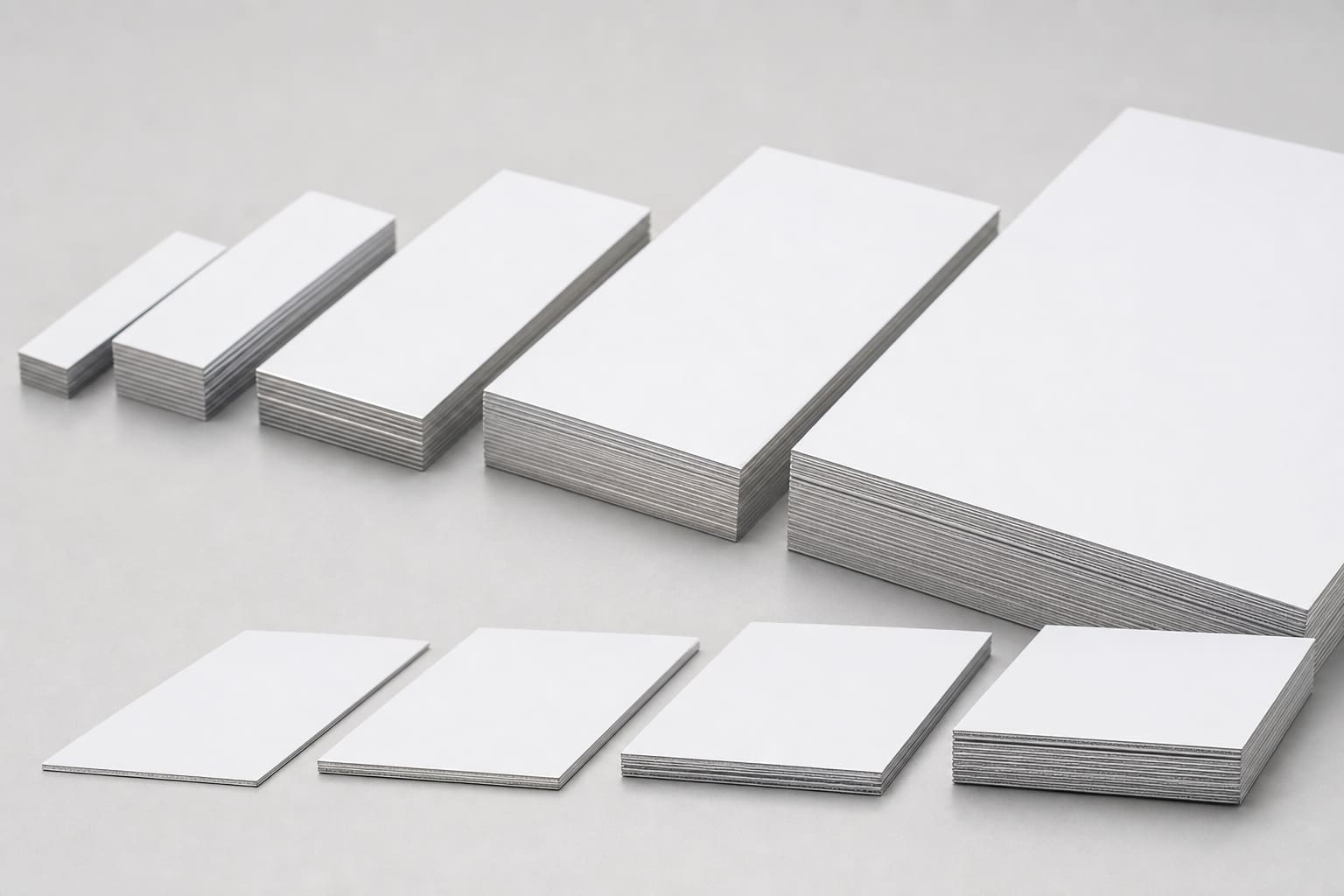
Select thickness for handling and construction
Thickness affects stiffness, weight, edge appearance, punching, bending behavior and packing density. It does not by itself guarantee print quality; the receptive coating and press process remain critical.
Do not copy a competitor’s thickness without understanding how the part is supported. Request actual samples in the candidate sizes because a larger panel flexes more than a small blank made from the same material.
Confirm size, tolerances and film
Specify length, width, thickness, diagonal or flatness expectations, corner radius and hole positions using a controlled drawing. State whether dimensions are nominal or subject to an agreed tolerance.
Protective film should protect the finish without leaving adhesive or being difficult to remove. Confirm whether film is on one or both sides and when it should be removed in the printing process.

Evaluate packaging and supply continuity
Packaging should prevent face-to-face abrasion, bent corners and moisture exposure. Ask how sheets are separated, wrapped, cartoned and palletized for the planned shipping method.
For repeat purchasing, agree how changes in coating, film, alloy source or packaging will be communicated. Consistency is a commercial requirement, not a marketing adjective.