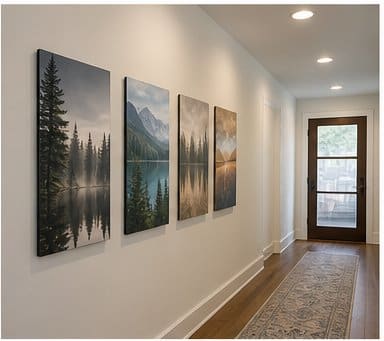
Measure the display area
Record the usable wall width and height, then mark the proposed print outline with low-tack tape or paper. Include furniture, switches, doors and the normal eye line.
Use furniture as visual context
A print above a sofa, bed or console should feel related to the furniture rather than floating as a small object. There is no universal percentage that works in every room, so test the outline physically.
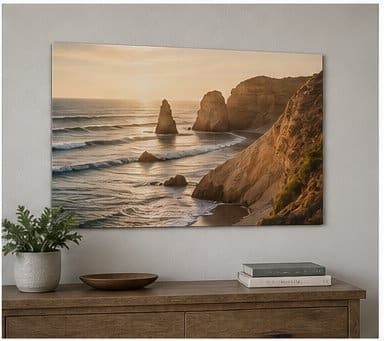
Match the image ratio
Camera files, phone photos and panoramic crops use different aspect ratios. Select a panel with a compatible ratio or decide where cropping can occur. Portraits need more protection around heads and hands than abstract artwork.
Check effective resolution
Divide pixel dimensions by the intended print dimensions to understand effective ppi. Adobe describes 300 ppi as a common high-quality target but also explains that viewing distance allows lower resolution for larger work.
Inspect focus and compression at 100%; a high pixel count does not repair a blurred source.
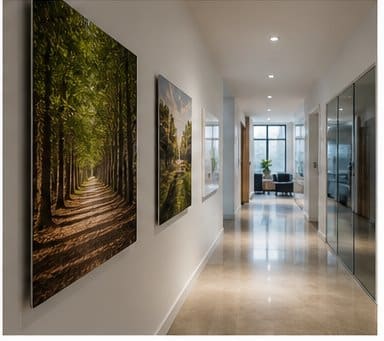
Single panel or coordinated set
A multi-panel set can fill a wide wall and create rhythm, but gaps become part of the composition. Avoid splitting faces, text or critical objects across panel gaps unless the artwork was designed for it.